| PVC-insulated copper cable |
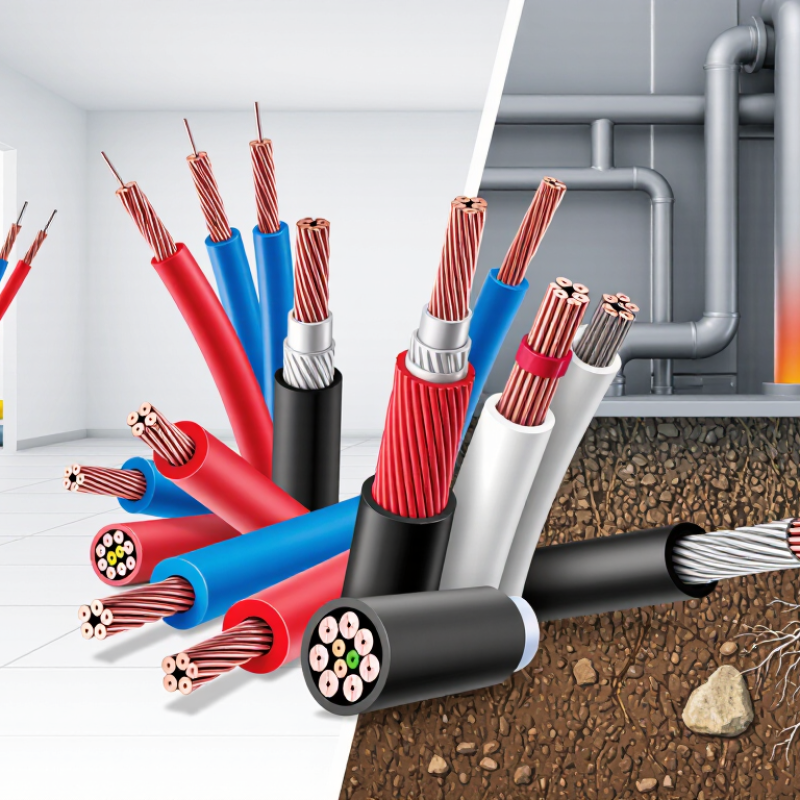
PVC insulation provides electrical insulation and is commonly used in fixed wiring. Typical PVC cable designs have a 70°C maximum continuous conductor temperature; the actual rating depends on the applicable cable standard and installation. |
Performs reliably in dry, protected installations when correctly sized and kept within its temperature and voltage ratings. Not every PVC cable is suitable for prolonged outdoor exposure, oils, or severe mechanical stress. |
Copper has high electrical conductivity. Efficiency depends mainly on conductor size, circuit length, load, and installation conditions—not on PVC insulation alone. |
Building wiring, distribution circuits, and general-purpose fixed installations. |
| XLPE-insulated copper cable |
Cross-linked polyethylene insulation commonly supports a 90°C maximum continuous conductor temperature in standard designs. The correct voltage rating, overcurrent protection, and installation method are still essential. |
Its heat resistance and moisture performance make it suitable for many demanding fixed installations. Service life depends on correct installation and protection from damage, UV exposure, and chemical conditions where relevant. |
XLPE does not automatically reduce conductor losses compared with PVC. Its higher temperature rating may allow a different permitted current capacity under the applicable rules, but ampacity must be calculated for the installation. |
Building distribution, industrial power circuits, and some underground or outdoor systems when the cable is specifically rated for them. |
| XLPE-insulated aluminum-conductor cable |
Aluminum connections require compatible terminals and correct preparation and tightening procedures. Poorly made connections can overheat; installation must follow the cable and equipment instructions. |
Can provide dependable service when properly sized and terminated. Aluminum has a higher thermal expansion and lower conductivity than copper, so connector compatibility and installation workmanship are important. |
Aluminum conductivity is about 61% of copper’s by the International Annealed Copper Standard. For similar conductor resistance, an aluminum conductor generally needs roughly 1.6 times the cross-sectional area of copper; actual design must follow electrical codes. |
Feeders and distribution systems where lower conductor weight or material cost is useful and larger conductor sizes can be accommodated. |
| Armored power cable |
Metal armor can provide additional mechanical protection against impact or crushing. The armor’s bonding, grounding, and termination must comply with local electrical rules; armor does not replace correct circuit protection. |
Well suited to installations exposed to physical damage, provided the armor type and cable construction match the environment. Corrosion resistance and suitability for direct burial vary by cable design. |
Armor itself does not make a cable more electrically efficient. Conductor material and size, circuit length, load, and operating temperature determine conductor losses. |
Industrial sites, service runs, and other locations where added mechanical protection is needed. |
| Flexible rubber-sheathed cable |
Flexible insulation and sheathing help protect conductors in portable or moving applications. Use only a cable rated for the required voltage, temperature, outdoor exposure, and level of mechanical duty. |
Designed to tolerate movement better than typical fixed-installation cable. Repeated flexing, abrasion, chemicals, and environmental exposure can still cause wear and require inspection. |
Flexibility does not inherently improve efficiency. Conductor size should be selected for load, length, voltage drop, duty cycle, and the applicable rules. |
Portable equipment, temporary power, and machinery connections where movement is expected. |