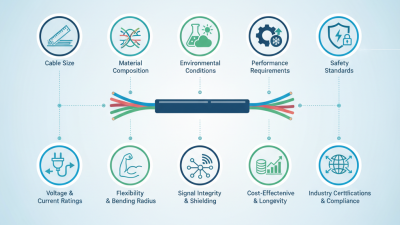
| Conductor Material |
Annealed stranded copper is widely used; tinned copper is common where corrosion resistance is required. |
Influences conductivity, flexibility, corrosion resistance, and termination reliability. |
IEC 60228; ASTM B8 |
| Conductor Cross-Section |
Common industrial sizes include approximately 0.5–6 mm², with larger sizes available for higher current loads. |
Determines allowable current, voltage drop, cable diameter, and installation space. |
IEC 60228; national wiring codes |
| Insulation Materials |
PVC is widely used for general-purpose control cables; PUR, TPE, and XLPE are selected for demanding environments. |
Affects temperature capability, oil resistance, abrasion resistance, flexibility, and service life. |
IEC 60227; UL 758; UL 62 |
| Rated Voltage |
Typical industrial control cable ratings range from 300/500 V to 450/750 V; specialized cables may use other ratings. |
Ensures safe operation within the electrical system and supports regulatory compliance. |
IEC 60227; IEC 60502-1 |
| Temperature Rating |
Common ratings are 70°C or 90°C continuous operation; higher ratings depend on insulation and application design. |
Prevents insulation aging, thermal damage, and premature cable failure. |
IEC 60227; UL and CSA requirements |
| Flexibility and Bending |
Fixed-installation cables commonly require a minimum bend radius of about 4–8 times the cable diameter; continuous-flex designs may require more specialized values. |
Reduces conductor fatigue and insulation damage during routing or repeated movement. |
Manufacturer construction specifications; IEC 60228 |
| Shielding Options |
Aluminum-polyester foil, copper braid, spiral shield, or combinations are used according to electromagnetic-noise requirements. |
Helps reduce electromagnetic interference in automation, instrumentation, and signal circuits. |
IEC 61000 series; EMC installation practices |
| Flame Performance |
Flame-retardant constructions are commonly specified for industrial buildings, control cabinets, transit systems, and machinery. |
Limits flame propagation and supports safer cable installations. |
IEC 60332-1-2; IEC 60332-3 series |
| Environmental Resistance |
Options may include oil-resistant, coolant-resistant, UV-resistant, low-temperature, and water-resistant constructions. |
Matches the cable to exposure conditions and reduces maintenance requirements. |
IEC 60811; UL 2556 |
| Application Coverage |
Typical uses include factory automation, robotics, machine tools, control panels, instrumentation, elevators, and transportation systems. |
A broad product portfolio improves suitability across fixed, flexing, and high-noise applications. |
IEC, UL, CSA, and sector-specific specifications |
| Quality and Compliance |
Important credentials include ISO 9001 quality management and applicable electrical, fire, environmental, and market-access approvals. |
Provides traceability, consistent production controls, and evidence of conformity. |
ISO 9001; CE; RoHS; REACH |
| Selection Priority |
Match conductor size, voltage, temperature, movement, shielding, environmental exposure, installation rules, and required approvals before comparing suppliers. |
Technical suitability and verified compliance are more reliable selection criteria than market visibility alone. |
Project specification and applicable local regulations |