| Cable Type |
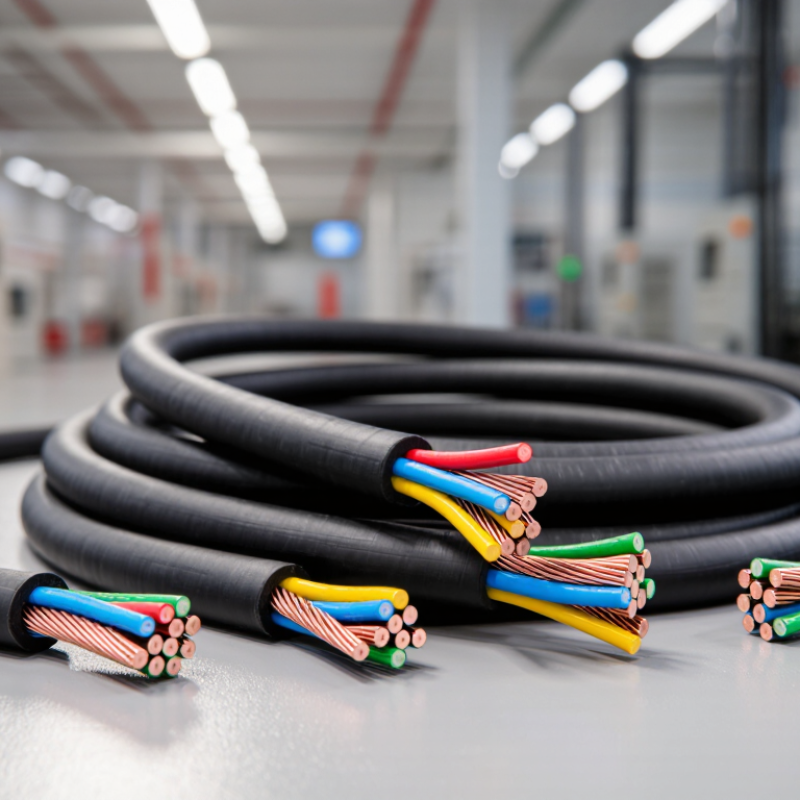
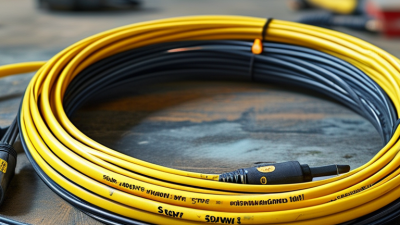
SOOW Portable, extra-hard-usage flexible cord with thermoset elastomer insulation and jacket construction. |
Designed for demanding portable equipment, industrial tools, construction equipment, generators, welding equipment, and similar applications. |
Confirm that the cable designation, construction, and intended use match the applicable electrical code and equipment requirements. |
| Voltage Rating |
600 V maximum for commonly specified SOOW constructions. |
Provides a suitable rating for many industrial power and portable-equipment circuits within the limits of the installation design. |
Voltage rating does not determine ampacity. Select conductor size, insulation temperature rating, installation method, and overcurrent protection separately. |
| Service Temperature |
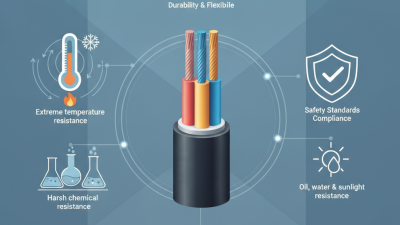
-40°C to 90°C is a commonly specified operating range for SOOW cable constructions. |
Supports use in cold outdoor environments and high-temperature industrial areas when the specific cable is rated accordingly. |
Check whether the stated range applies to wet, dry, flexing, and stationary conditions. The lowest installation temperature may differ from the operating rating. |
| Oil Resistance |
The first “O” indicates oil-resistant insulation; the second “O” indicates an oil-resistant outer jacket. |
Improves suitability for workshops, machine rooms, garages, manufacturing areas, and equipment exposed to petroleum-based oils. |
Verify the applicable oil-resistance test designation and exposure conditions. Oil resistance does not mean resistance to every chemical or solvent. |
| Water Resistance |
The final “W” indicates suitability for outdoor and wet-location use when the cable is installed according to its listing requirements. |
Useful for temporary power, outdoor machinery, construction sites, pumps, and other locations where moisture may be present. |
Confirm wet-location suitability, sealing requirements, connector compatibility, and whether immersion is permitted. |
| Conductor Material |
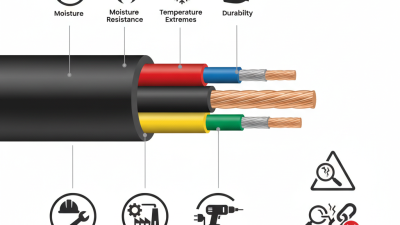
Typically stranded copper conductors, often arranged for high flexibility. |
Stranding supports repeated movement and easier handling compared with solid conductors. |
Confirm conductor material, stranding class, conductor size, grounding conductor arrangement, and any requirements for tinned copper. |
| Conductor Count |
Common configurations include two, three, and four insulated conductors, with or without a grounding conductor depending on the construction. |
Allows selection for single-phase, three-phase, control, and equipment-power circuits. |
Specify the exact number of power conductors, neutral requirements, grounding conductor, and color identification before ordering. |
| Insulation and Jacket |
Commonly uses durable elastomeric materials designed for flexibility, abrasion resistance, and demanding service. |
The robust jacket helps protect the cable from routine mechanical handling and industrial exposure. |
Request the construction sheet for jacket compound, nominal wall thickness, outside diameter, bend radius, and abrasion performance. |
| Flexibility |
Extra-hard-usage flexible cord construction; flexibility varies by conductor size, strand design, temperature, and cable diameter. |
Suitable for portable tools, movable machinery, extension assemblies, and equipment that is repositioned during operation. |
For continuous flexing, festoon systems, drag chains, or robotic motion, verify that the specific product is designed and tested for that duty. |
| Common Compliance References |
North American SOOW products are commonly evaluated against applicable UL and CSA requirements, including flexible-cord standards and marking rules. |
Recognized certifications can support regulatory review, installation approval, and procurement acceptance in target markets. |
Confirm the exact certification marks, file information, country requirements, and whether approvals apply to the complete cable construction. |
| Ampacity Selection |
Ampacity depends on conductor size, conductor temperature rating, number of current-carrying conductors, ambient temperature, and installation conditions. |
Correct sizing helps control conductor heating and supports safe equipment operation. |
Use the governing electrical code and the cable manufacturer’s ampacity data. Do not infer ampacity from the 600 V rating alone. |
| Mechanical Protection |
The jacket is designed for heavy-duty service, but the cable is not automatically protected against crushing, cutting, sharp edges, or vehicle traffic. |
Additional protection may be necessary in factories, warehouses, construction zones, and high-traffic areas. |
Evaluate routing, strain relief, abrasion points, bend radius, impact exposure, and protection from moving equipment. |
| Global Purchasing Checklist |
Define voltage, conductor count, conductor size, length, jacket color, temperature range, oil and water exposure, packaging, and certification needs. |
A complete specification reduces substitutions, customs delays, installation mismatches, and nonconforming shipments. |
Ask for a current datasheet, test or certification documentation, dimensional data, tolerances, marking details, and lot traceability. |