Leave Your Message

How to Choose the Right Power Cable Type for Your Needs?

Choosing the right power cable type is crucial for any electrical project. The global power cable market is expected to reach $224.4 billion by 2026, according to a recent report by Market Research Future. This growth underscores the increasing demand for diverse applications, ranging from residential to industrial uses.

Experts emphasize the importance of selecting the correct power cable type. John Smith, a leading electrical engineer, notes, "The right power cable can enhance efficiency and safety in installations." His insights highlight how misjudging cable specifications can lead to project failures and increased costs.

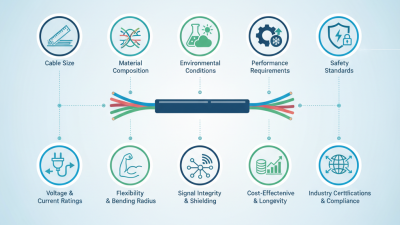
Understanding factors like voltage ratings, insulation materials, and cable sizes is essential. Many professionals overlook these details, leading to potential hazards. As projects become more complex, the need for knowledgeable choices in power cable types grows more significant. Selecting the appropriate cable involves assessment and foresight, yet many still struggle with this decision. This article aims to clarify how to choose the right power cable type tailored to specific needs.

How to Choose the Right Power Cable Type for Your Needs?

Understanding the Basics: Types of Power Cables and Their Applications

When selecting power cables, understanding their types is crucial. Various cables serve distinct purposes. For instance, low voltage cables are ideal for household appliances. High voltage cables, on the other hand, are suited for industrial applications. The right choice impacts safety and efficiency.

Thermoplastic and thermoset cables have their unique characteristics. Thermoplastic cables are flexible and easy to install. They can be a good fit for indoor use. In contrast, thermoset cables withstand higher temperatures. They're often used in more demanding environments. Different materials affect durability and conductivity.

It’s important to consider the environment when choosing cables. Factors such as moisture, temperature, and physical stress play a role. Cables might need protective sheathing to enhance their life span. Always factor in these elements to avoid mistakes. Reflect on your actual needs rather than going for the most popular option. A misstep here can lead to significant inconveniences.

How to Choose the Right Power Cable Type for Your Needs?

Cable Type Voltage Rating Current Rating Applications Key Features
PVC Power Cable 300/500V Up to 32A Indoor wiring, lighting Flexible, cost-effective
XLPE Power Cable 600/1000V Up to 250A Industrial applications, outdoor use High thermal resistance, durable
Rubber Power Cable 450/750V Up to 63A Construction sites, heavy-duty applications Flexible, weather-resistant
Armoured Power Cable 600/1000V Up to 300A Underground installations, high-risk environments Mechanical protection, durable
Flat Power Cable 250V Up to 16A Home appliances, low-current devices Space-saving, easy to install

Factors to Consider: Voltage Rating, Amperage, and Cable Length

When selecting a power cable, key factors include voltage rating, amperage, and cable length. The voltage rating indicates the electrical potential the cable can safely handle. For instance, cables rated for 600V are common in industrial applications. However, in high voltage scenarios, ratings up to 35kV may be necessary. Not considering the voltage can lead to overheating and potential hazards.

Amperage is equally crucial. It reflects the amount of current a cable can carry. According to the National Electrical Code (NEC), a standard copper cable might typically handle 20 amps for residential use. Running higher amperages without proper cable selection can result in insulation damage or fire risks. Users must analyze their equipment’s current requirements closely to avoid any miscalculations.

Cable length also plays a role in performance. Longer cables can lead to voltage drop, which diminishes efficiency. Reports indicate that a 100-foot cable can experience a drop of over 10%. Minimizing length or choosing thicker cables can mitigate this issue but at increased cost. The balance between cable length and thickness is a common oversight, requiring careful planning.

Material Matters: Comparing Copper vs. Aluminum Power Cables

How to Choose the Right Power Cable Type for Your Needs?

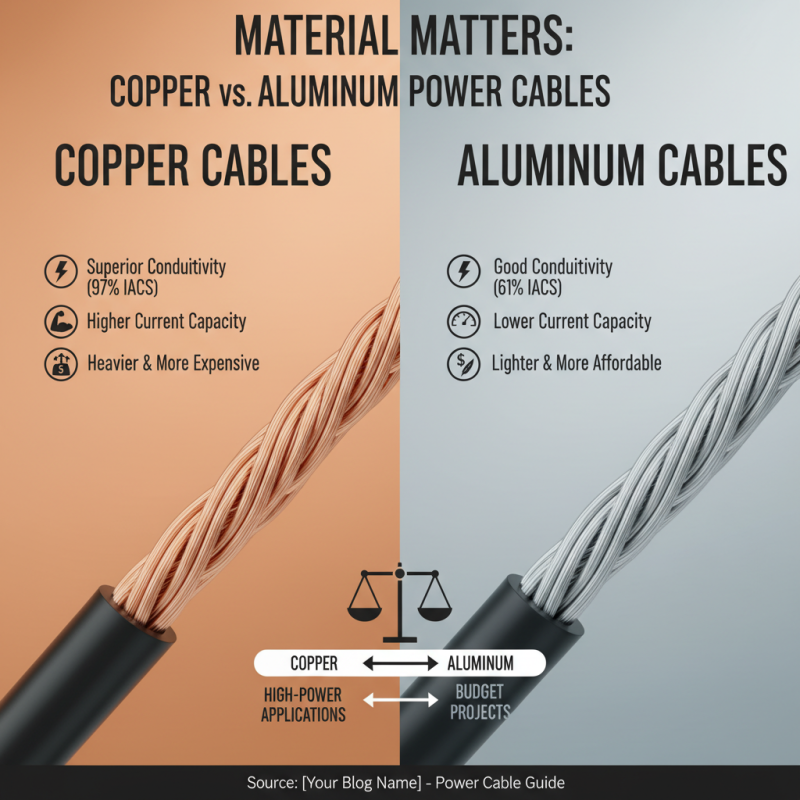
When choosing power cables, the material significantly influences performance and durability. Copper and aluminum are the two primary materials, each with distinct advantages and drawbacks. Copper possesses superior electrical conductivity, boasting a conductivity rating of 97% compared to aluminum’s 61%. This means that copper cables can carry more current over longer distances without loss, making them ideal for high-power applications. However, copper cables are heavier and more expensive, which could be a concern for budget-conscious projects.

On the other hand, aluminum cables are lighter and generally more cost-effective. According to a recent industry report, using aluminum can reduce material costs by up to 30% compared to copper. Yet, contractors must consider aluminum's lower conductivity. For installations requiring long runs or higher voltage, larger gauge aluminum cables may be necessary. This can lead to further installation complexities and increased labor costs.

While both materials have their merits, the choice depends on specific project requirements. Aluminum's susceptibility to corrosion and greater thermal expansion can lead to inefficiencies over time. Copper's longevity and reliability, despite its initial cost, may be the wiser investment in critical infrastructure. Ultimately, careful consideration of these factors is essential in selecting the right power cable type.

Specialized Power Cables: When to Use Shielded or Armored Options

When it comes to choosing power cables, the type you select can impact performance significantly. Specialized power cables are often necessary for specific applications. Shielded options are ideal in environments with high electromagnetic interference (EMI). For example, factories or laboratories often require shielded cables to prevent signal degradation.

Armored cables, on the other hand, are designed to withstand physical damage. They are excellent for outdoor use or areas prone to rodent activity. According to industry reports, using armored cables can reduce maintenance costs by up to 30%. This speaks to their reliability in harsh conditions.

One important tip is to assess your environment. If you work in a place with substantial interference, go for shielded cables. For outdoor settings, armored options provide protection. Always consider the specific hazards your cables might face. Being informed can save you time and money in the long run.

Regulatory Standards: Compliance and Safety in Power Cable Selection

When selecting power cables, regulatory standards are crucial. Compliance with these standards ensures safety and reliability in electrical installations. Agencies like the National Electrical Code (NEC) and the Institute of Electrical and Electronics Engineers (IEEE) provide guidelines that help mitigate electrical hazards. Only by adhering to these standards can professionals guarantee the safety of their systems.

Many users overlook the importance of environmental conditions in their cable choice. For example, cables exposed to extreme temperatures or moisture require different materials and insulation. According to the International Electrotechnical Commission (IEC), up to 30% of electrical failures stem from improper cable selection. This statistic underscores the need for thorough knowledge of safety standards and environmental factors.

Tips:
- Always check local codes and standards before installation.
- Consider the cable's temperature rating based on installation location.
- Regular training can keep professionals updated on compliance changes.

Non-compliance may lead to increased risks, so staying informed is essential. Each installation should be evaluated on its own merit. Striving to meet regulatory standards is not just about following the law; it’s about operating safely and effectively.