Leave Your Message

Top 10 Benefits of Using Soow Cable for Your Electrical Projects?

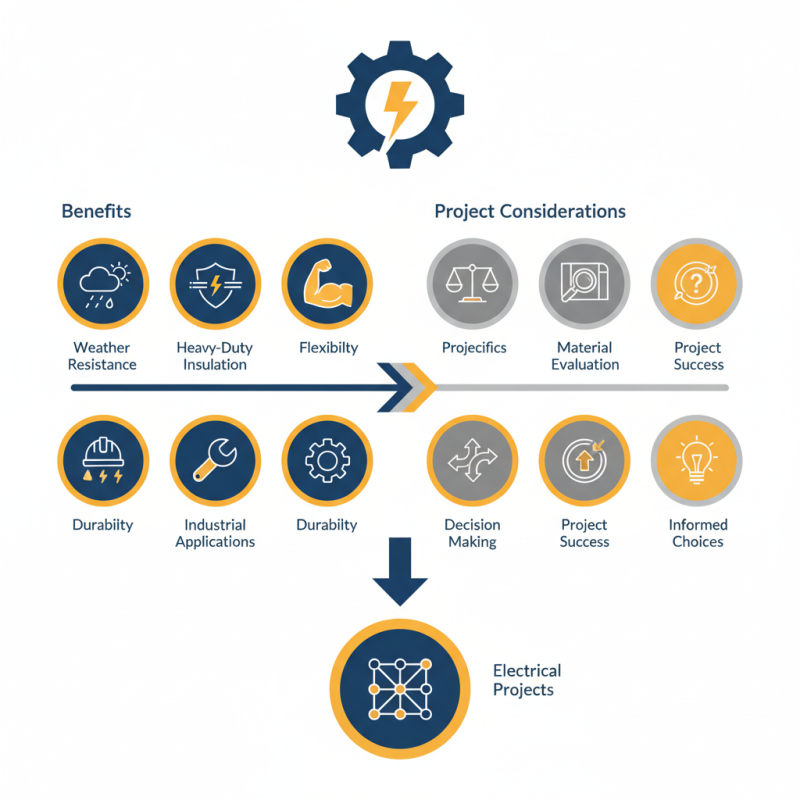
When it comes to electrical projects, choosing the right cable is crucial. One popular option is Soow Cable, known for its durability and flexibility. This cable type is designed for industrial applications, making it ideal for various environments.

Soow Cable offers many advantages that can significantly impact project success. Its weather resistance, for instance, ensures reliability in harsh conditions. Additionally, the cable's heavy-duty insulation protects it from mechanical damage, enhancing overall safety.

However, not all projects may benefit equally from Soow Cable. Sometimes, project specifics can influence the decision. Thoroughly evaluating materials can lead to better project outcomes. Overall, understanding the unique benefits of Soow Cable is essential for informed decision-making in electrical work.

Top 10 Benefits of Using Soow Cable for Your Electrical Projects?

The Definition and Characteristics of Soow Cable

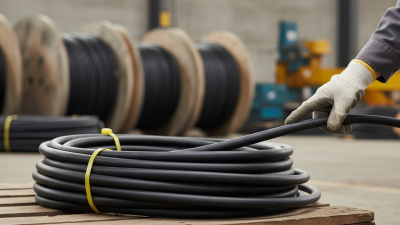
Soow cable is a type of electric cable known for its flexibility and durability. It is often used in various electrical applications, especially where movement is involved. Made of stranded copper wires, Soow cables are sheathed in a tough thermoplastic material. This design allows them to withstand severe weather conditions and wear and tear.

One notable characteristic of Soow cable is its high resistance to both heat and moisture. This makes it suitable for outdoor use. It is also designed to be oil-resistant, which is important in industrial settings. However, the cables can be stiff in extreme cold, making installation tricky. Users should be aware of this limitation during colder months. The insulation material is important, but it can be complicated to choose the right type for specific projects. Overall, understanding the properties of Soow cable is crucial for efficient electrical installations.

Key Advantages of Soow Cable in Electrical Installations

Top 10 Benefits of Using Soow Cable for Your Electrical Projects?

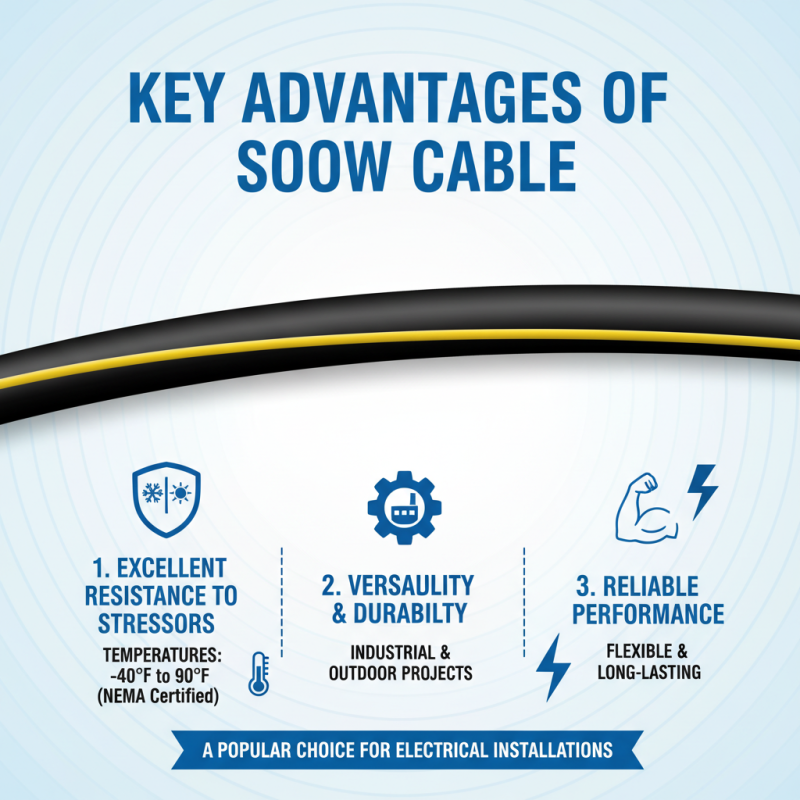
Soow cable is a popular choice in electrical installations due to its versatility and durability. One of its primary advantages is its excellent resistance to environmental stressors. According to the National Electrical Manufacturers Association (NEMA), Soow cables can withstand extreme temperatures ranging from -40°F to 90°F. This flexibility ensures reliable performance in various settings, especially in industrial or outdoor projects.

Another key benefit is the cable's high abrasion resistance. Data from the Institute of Electrical and Electronics Engineers (IEEE) indicates that Soow cables can endure harsh mechanical conditions, reducing the risk of wear and tear over time. This longevity can lower maintenance costs and improve safety by minimizing the chances of electrical failures.

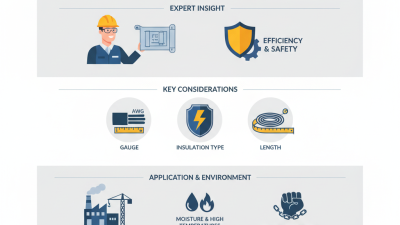
Tips: Always assess your project’s environmental conditions before choosing cable types. Consider factors like temperature, moisture, and potential physical stress. Proper installation can maximize the advantages of Soow cables, ensuring they perform effectively for longer durations. Inspect cables regularly to identify any wear and act quickly to address issues.

Applications of Soow Cable in Various Industries

Soow cable is increasingly used across various industries due to its versatility and robust construction. This type of cable excels in environments with flexible use requirements and fluctuating temperatures. It's rated for outdoor use, making it suitable for construction sites and repair jobs. From automotive to entertainment, Soow cables serve multiple applications effectively.

In electrical projects, Soow cables provide superior conductivity, ensuring efficient power transfer. In the marine industry, they resist moisture and salt, making them ideal for boats and docks. In agriculture, farmers use Soow cables to connect machinery in harsh outdoor settings. This versatility showcases its adaptability and reliability.

**Tip:** Ensure you choose the right gauge for your projects. A mismatch can lead to overheating and failure.

Another notable application is in the entertainment industry. Soow cables are often employed in stage lighting and sound systems. Their flexibility allows for quick setups and takedowns. However, when using in high-traffic areas, proper management is key to avoid damage.

**Tip:** Regularly inspect your Soow cables for signs of wear. Early detection can prevent more serious issues down the line.

Top 10 Benefits of Using Soow Cable for Your Electrical Projects

Benefit Description Application Areas
Durability Resistant to abrasion, chemicals, and harsh environments. Manufacturing, Construction
Flexibility Easily bends and maneuvers in tight spaces. Automotive, Robotics
Temperature Resistance Can operate in extreme temperatures. Aerospace, Oil & Gas
Moisture Resistance Prevents water ingress to ensure safety and functionality. Marine, Agriculture
Electrical Safety Enhanced insulation to prevent electrical faults. Industrial, Residential
Cost-Effective Long lifespan reduces replacement costs. Commercial, Power Generation
Wide Range of Applications Suitable for various industries and applications. Mining, Telecommunications
Compliance with Standards Meets national and international safety regulations. Electrical, Construction
High Conductivity Ensures efficient energy transmission. Energy Sector, Data Centers
Environmentally Friendly Manufactured with recyclable materials. Green Energy, Sustainability Projects

Comparative Analysis: Soow Cable vs. Other Electrical Cables

When comparing Soow cable to other electrical cables, durability is a key consideration. Soow cables are designed with a high-quality rubber jacket, providing exceptional resistance to abrasion and environmental factors. Industry reports indicate that rubber-insulated cables have a longer lifespan than PVC-insulated alternatives, often outlasting them by up to 35%. This longevity makes Soow cables a sound investment for project managers.


Flexibility is another significant advantage of Soow cable. Their construction allows for easier handling and installation in tight spaces compared to rigid cables. According to a study conducted by the Electrical Safety Foundation International, flexible cables reduce installation time by about 20%. This efficiency can lead to substantial cost savings, but it’s essential to ensure that this flexibility does not sacrifice safety standards.


While Soow cables excel in many areas, they may come at a higher initial cost. This requires careful consideration during budget planning. Project managers should weigh this upfront expense against the long-term benefits. Some may hesitate, fearing unknown long-term costs, but well-researched findings suggest that the benefits often outweigh the initial financial layout for these robust cables.

Maintenance and Safety Tips for Using Soow Cable

When working with Soow cable, maintenance is key to ensuring its durability and safety. Regular inspections can prevent potential hazards. Look for signs of wear, fraying, or cracks in the insulation. These issues can lead to electrical failures or even fire hazards. If you notice any damage, replace the cable immediately. It’s vital to keep the installation area clear of obstacles that could cause physical damage or strain on the cable.

Safety is equally important when using Soow cable. Always confirm that the cable is rated for the environment it is in. Wet or excessively hot conditions can affect its performance. Ensure all connections are tight to avoid shorts or intermittent power loss. Lastly, never expose the cable to harsh chemicals or extreme temperatures. Doing so can degrade its materials and functionality. Staying vigilant and practicing safe handling will extend the lifespan of your Soow cable significantly.

Top 10 Benefits of Using Soow Cable for Your Electrical Projects