2026 Top Insights on Single Core Wire Benefits and Uses?
The use of Single Core Wire has gained significant attention in various industries. This simple yet effective design offers a range of benefits that enhance efficiency and performance. One notable advantage is its lightweight nature, making installation easier and reducing overall material costs. When it comes to electrical applications, Single Core Wire demonstrates remarkable conductivity properties, which are essential for reliable performance.
Additionally, Single Core Wire is highly flexible. This flexibility allows for simpler routing in tight spaces, which is something many technicians appreciate. While many see these benefits clearly, some may overlook potential drawbacks. For instance, single core wiring may not provide the same durability under extreme temperatures compared to multi-core alternatives. It’s vital to assess specific project needs thoroughly before making a decision.
Overall, the insights into Single Core Wire will help industries make informed choices. Understanding its applications can lead to enhanced designs and cost-effectiveness. As we explore the benefits and uses of Single Core Wire, we pave the way for smarter solutions in electrical installations.
Overview of Single Core Wire Technology
Single core wire technology is a common choice in various applications due to its simplicity and effectiveness. This type of wire consists of a single conductor, making it ideal for straightforward tasks.
It is often used in electrical systems where space and weight constraints are a concern. The minimalist design allows for easy installation and flexibility in routing.
One of the main benefits of single core wire is its conductivity. With fewer components, the electrical flow is more direct. However, users should be cautious of its limitations. Single core wire is not always suitable for high-power transmission. In some cases, it may struggle under heavy loads. Proper assessment of the specific application is crucial.
Tips:
Always check the wire’s specifications before use. Too high a rating can lead to failures. Also, consider the environment. Exposure to moisture can damage single core wire over time. Regular inspection is essential for ensuring long-term reliability.
Key Benefits of Using Single Core Wire
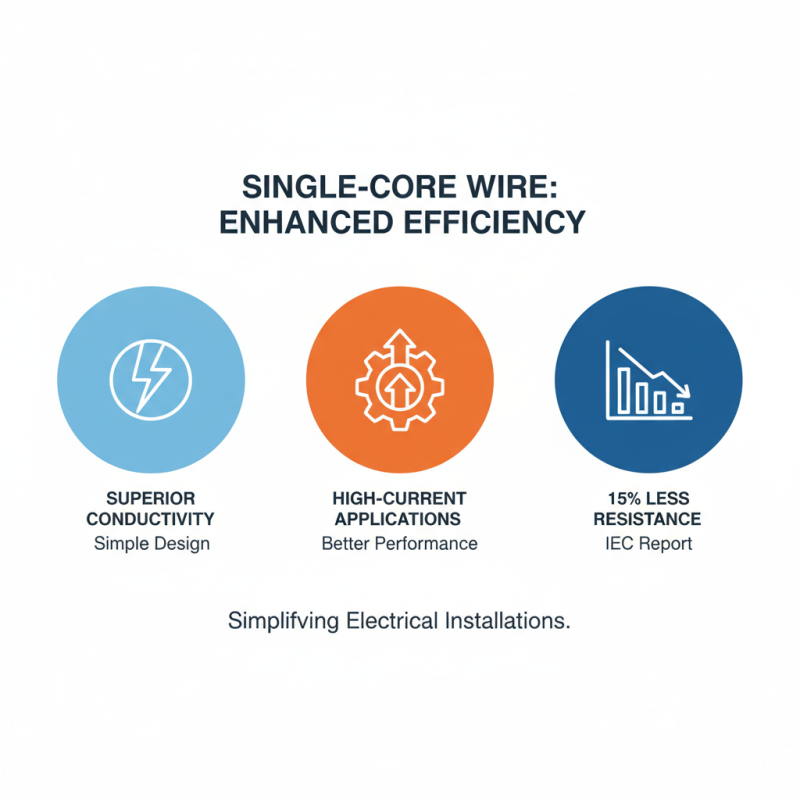
Single core wire is a popular choice in various electrical applications. This type of wire offers several advantages that can enhance efficiency in installations. For instance, single core wire provides excellent conductivity due to its simple design. It typically offers better performance in high current applications. A recent report from the International Electrotechnical Commission indicates that single core wires can conduct electricity with up to 15% less resistance compared to multi-core options.
One of the key benefits is its flexibility in tight spaces. Single core wire can easily navigate through small conduits or tight corners. Additionally, it tends to have a lighter weight, which makes installation simpler. However, it’s essential to note that using single core wire in certain applications may not be the best choice. For instance, in environments with significant movement, multi-core wire might be more durable.
Tips: When selecting wire, always consider the application requirements. Proper insulation and gauge are crucial. Too often, users overlook these details, which can lead to inefficiencies. Always check the installation surroundings to ensure the wire type chosen is optimal for performance and safety.
Common Applications of Single Core Wire in Various Industries
Single core wire has become a staple in many industries due to its versatility and practicality. It is commonly used in electrical wiring, providing a reliable connection for power distribution. Its structure allows for flexibility in installation, making it ideal for tight spaces. Whether in residential or industrial settings, single core wire can efficiently handle electrical demands.
In the automotive sector, single core wire plays a crucial role. It connects various electrical components within vehicles, ensuring smooth operation. For instance, it is often found in lighting systems and ignition circuits. Its lightweight nature reduces overall vehicle weight, which is a plus for fuel efficiency. However, care must be taken during installation to avoid potential short circuits.
Another area where single core wire shines is in renewable energy systems. Solar panels rely on it for transmitting power to inverters. This use highlights its importance in supporting eco-friendly technologies. Yet, the challenge lies in selecting the right gauge to avoid performance issues. Each application demands specific considerations for optimal effectiveness.
Comparative Analysis: Single Core Wire vs. Multi-Core Wire
Single core wire and multi-core wire both serve important roles in electrical applications. Single core wire consists of a single conductor, making it ideal for many situations. Its simplicity allows for easier installation and maintenance. The wire is often used in fixed installations, like residential wiring.
Comparatively, multi-core wire features multiple strands twisted together. This design offers flexibility, allowing it to bend easily in tight spaces. However, it might require more time to install, leading to potential complications. In environments where movement is constant, multi-core wire offers significant advantages. Yet, single core wire is generally preferred for its durability in stationary settings.
Choosing between the two can be challenging. Single core wire is straightforward but can be less adaptable. Multi-core wire excels in flexibility but may involve intricate installation processes. Evaluating the specific needs of a project is crucial. Reflecting on how each type serves different purposes can lead to better choices in electrical design.
Future Trends and Innovations in Single Core Wire Design
The landscape of single core wire design is evolving rapidly. Innovations are reshaping how these wires are used across various industries. Increased efficiency and performance are driving this transformation. With a focus on minimalism, manufacturers are experimenting with materials and designs. Lighter and stronger wires are emerging, allowing for easier installation and enhanced flexibility.
One noteworthy trend is the integration of smart technologies. This is particularly evident in electrical applications. Wires are becoming more than just conduits; they are now capable of monitoring performance. For instance, some designs may allow for real-time data transmission. This could improve maintenance practices and enhance overall system reliability. Yet, as we embrace these advancements, we must also address the potential issues. The push for smart features may lead to more complex installations, raising questions about user training and compatibility.
Additionally, sustainability is taking center stage. Many manufacturers are exploring eco-friendly materials. This shift aims to reduce environmental impact without sacrificing quality. However, this focus on sustainability can be a double-edged sword. Some newly developed materials may not perform as well under certain conditions. These factors are crucial to consider for long-term applications. As the industry moves forward, it's essential to balance innovation with practicality.
2026 Top Insights on Single Core Wire Benefits and Uses
This chart presents a summary of the key benefits of single core wire as of 2026. The ratings reflect the perceived advantages in various categories, highlighting the strengths of single core wire in electrical efficiency, cost-effectiveness, flexibility, durability, and ease of installation.