Leave Your Message

10 Essential Tips for Choosing the Right Control Cable for Your Project?

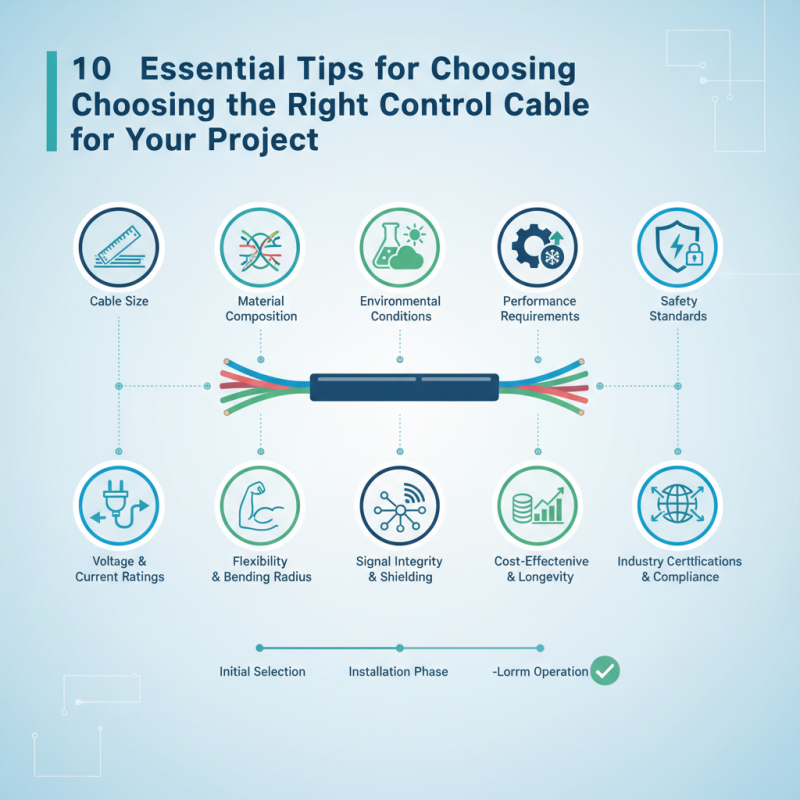
Choosing the right Control Cable for your project is crucial. It directly affects performance and safety. According to a report by Industry Insights, improper cable selection can lead to a 30% increase in maintenance costs. The market is filled with options. However, not all Control Cables are created equal. There are specific parameters to consider.

John Smith, a renowned expert in electrical engineering, states, "Selecting the right Control Cable is not just a choice; it's an investment in reliability." His insights underline the importance of careful selection. Factors include cable size, material, and environmental conditions. A small oversight can result in project delays or even failures.

The truth is, many professionals overlook the specific needs of their application. That can lead to costly consequences. It's easy to underestimate the influence of cable specifications. A thorough understanding of Control Cable attributes is essential for successful project outcomes.

10 Essential Tips for Choosing the Right Control Cable for Your Project?

Understanding the Different Types of Control Cables Available

When selecting a control cable for your project, it's crucial to understand the various types available. Control cables come in different constructions, each designed for specific applications. For example, multi-core cables are often used in complex systems, while single-core options are suitable for simpler setups.

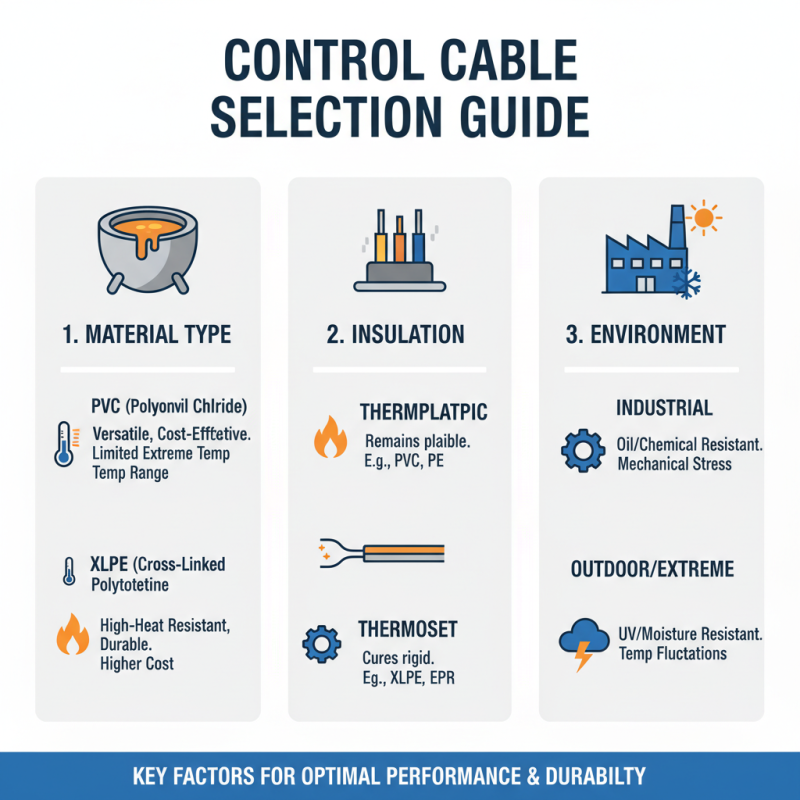
You may also encounter shielded cables. These protect against electromagnetic interference, making them ideal for sensitive environments. However, they can be more expensive. Additionally, consider the insulation material. PVC is common but not always the best for high-temperature situations. In some cases, you might reflect on whether your chosen insulation is appropriate for the specific environment.

Cable length is another key factor. Longer cables may introduce signal degradation. Use the right gauge to prevent this issue. Installation can be tricky too. Make sure to allow for bends and turns without damaging the cable. While you might think a thicker cable is always better, heavier cables can be cumbersome. It's important to balance between strength and flexibility.

Key Factors to Consider When Selecting Control Cables

10 Essential Tips for Choosing the Right Control Cable for Your Project?

When selecting control cables for a project, several key factors must be considered. Material selection is crucial. The insulation type affects performance and durability. For instance, PVC is versatile but may not withstand extreme temperatures. On the other hand, cross-linked polyethylene excels in high-heat environments but is often more expensive.

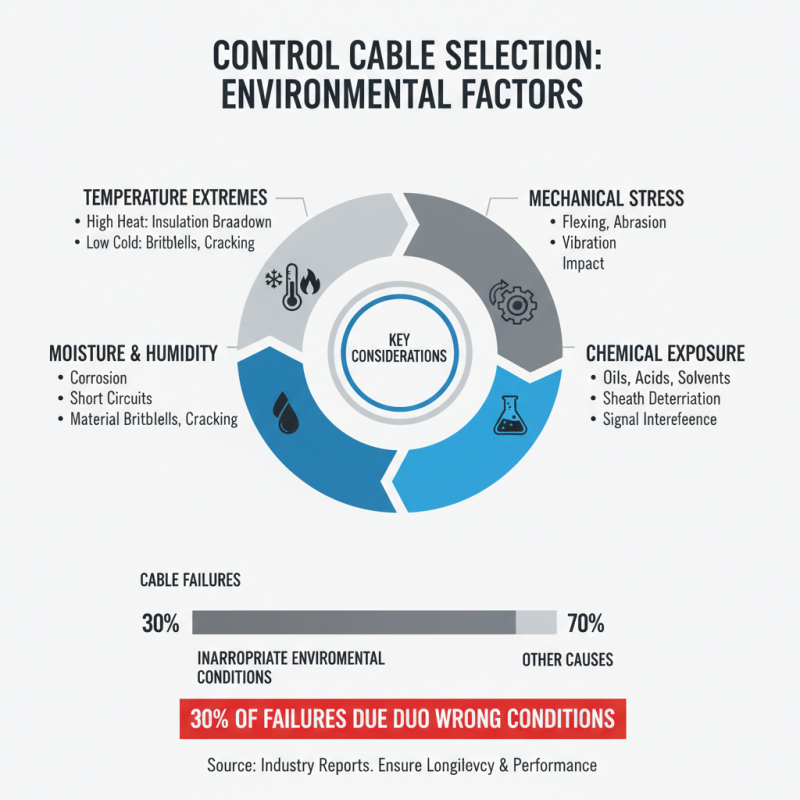
The cable's wire gauge is another vital factor. A thicker gauge can reduce resistance, enhancing efficiency. However, it can also increase costs and weight. A careful balance is necessary. Environmental conditions play a role too. According to a recent industry report, about 30% of cable failures occur due to improper material choices driven by specific application environments.

Performance ratings are also essential. Look for cables with appropriate ratings for voltage and temperature. Many specifications might seem overwhelming. However, they are crucial for ensuring long-term reliability. Remember, a cable that performs well in one scenario may fail in another. Always assess the installation requirements and environmental factors carefully. Ignoring these can lead to costly mistakes.

Assessing Environmental Conditions for Control Cable Suitability

10 Essential Tips for Choosing the Right Control Cable for Your Project?

When selecting control cables, environmental conditions significantly impact their suitability. Factors like temperature, moisture, and chemical exposure can determine cable longevity and performance. According to industry reports, nearly 30% of cable failures relate to inappropriate environmental conditions. Understanding these factors is crucial for successful project outcomes.

For instance, cables operating in high-humidity areas need proper insulation. If not, corrosion can occur. A study revealed that metal corrosion can reduce cable lifespan by up to 50%. Similarly, exposure to extreme temperatures can impair functionality. Many cables are rated for specific temperature ranges. Ignoring this can lead to inefficient performance.

Another aspect to consider is chemical exposure. Industrial environments often have various abrasive substances. Control cables must be resistant to these chemicals. A report indicated that about 20% of installation failures are linked to chemical damage. Additionally, the physical layout can complicate installation. Tight bends or proximity to other elements can create stress points. These details matter more than one might think.

Determining Cable Length and Installation Constraints

Choosing the right control cable requires careful consideration of cable length and installation constraints. Accurate measurements are critical. Cabling systems can account for up to 30% of a project’s costs. Shorter cable runs often increase efficiency, but how much length is necessary? Overestimating can lead to waste, while underestimating can cause operational issues.

Installation constraints also shape your choices. Consider the environment where the cables will be deployed. For indoor setups, flexibility is vital, especially in tight spaces. However, outdoor cables must resist weather elements. The National Electrical Manufacturers Association reports that improper installations can lead to a 25% increase in maintenance costs. Avoid common pitfalls by assessing your project's specific needs.

While it’s tempting to overlook the details, think about possible obstacles. Sharp bends or exposure to chemicals can damage cables. Many installers fail to account for these factors, resulting in unexpected failures. Review your installation site thoroughly, as it can make a significant difference in performance.

Evaluating Budget and Cost-Effectiveness in Cable Choices

When selecting a control cable, evaluating your budget and cost-effectiveness is crucial. A high-quality cable may come at a premium. However, cheaper alternatives might not offer the same reliability. Assess the long-term benefits of investing in a durable product compared to short-lived, lower-cost options. Understanding these nuances helps avoid overspending.

Be mindful of where costs might add up. Consider installation fees, potential downtime, and maintenance expenses. High-quality cables could minimize these additional costs in the long run. Yet, it’s easy to overlook how these factors impact overall budgeting. A cable that fits your project specifications should ideally provide value beyond its initial price.

Reflect on project requirements as well. Tailoring your choices to specific applications often yields the best efficiency. Sometimes, compromising on specifications to save money may backfire. Investing wisely today can prevent costly mistakes tomorrow. Think critically about each cable choice and its implications for your project’s success.

10 Essential Tips for Choosing the Right Control Cable for Your Project - Evaluating Budget and Cost-Effectiveness in Cable Choices

Tip Number Tip Title Description Estimated Cost Range
1 Define Your Requirements Understand the specific voltage, current, and environment where the cable will be used. $200 - $500
2 Consider Cable Length Calculate the distance and add extra for routing to avoid shortages. $100 - $300
3 Evaluate Flexibility Needs Determine if the cable requires flexibility for moving applications. $150 - $400
4 Check Environmental Conditions Assess temperature, humidity, and exposure to chemicals. $200 - $450
5 Look for Certification Standards Choose cables that meet relevant industry standards for safety. $100 - $350
6 Compare Different Materials Analyze copper vs. aluminum and their respective costs. $120 - $400
7 Assess Installation Complexity Determine the labor costs related to the installation of cables. $250 - $600
8 Get Multiple Quotes Request pricing and availability from multiple suppliers. Varies
9 Plan for Future Upgrades Select cables that offer scalability for future projects. $300 - $700
10 Read Reviews and Feedback Investigate feedback about the longevity and performance of cables. Varies