How to Choose the Right Soow Cable for Your Electrical Needs?
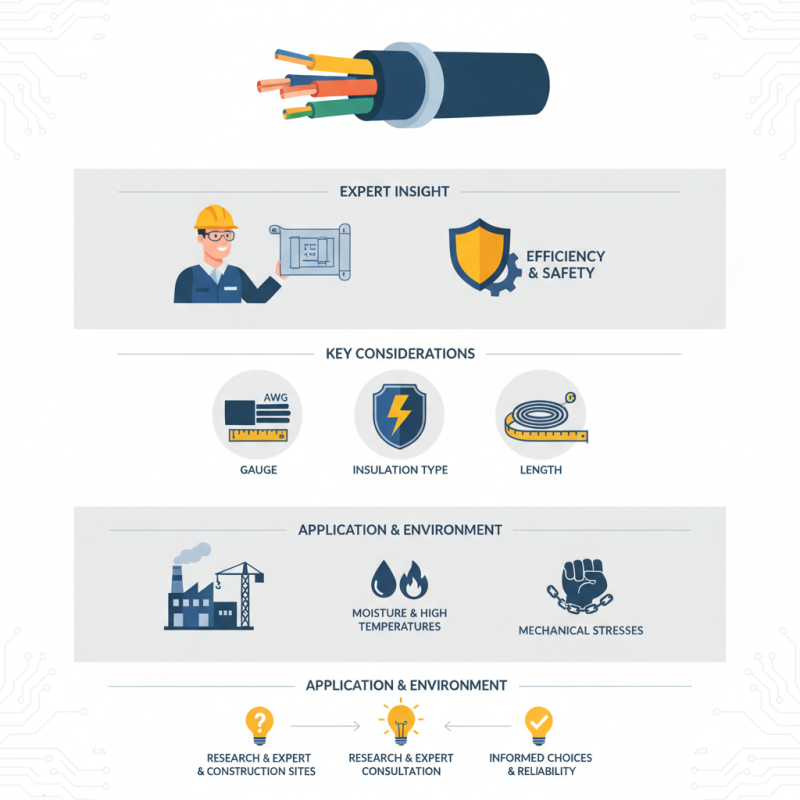
Choosing the right Soow Cable can significantly impact your electrical projects. Industry expert John Smith, a veteran in electrical engineering, emphasizes, "The right cable can enhance project efficiency and safety." With various options available, understanding your specific needs is crucial.
Soow Cables are designed for flexibility and durability in various applications. They are used in industrial settings, construction sites, and more. Selecting the proper gauge, insulation type, and length can be challenging. Each project has its unique demands, making it essential to do thorough research. The wrong choice can lead to safety hazards or performance issues.
As you navigate the Soow Cable market, consider the environment and conditions they will face. Are moisture and high temperatures factors? What about potential mechanical stresses? Every detail matters. Reflecting on past experiences and consulting with experts can guide your decision. Making informed choices is vital to ensure reliability and efficiency in your electrical systems.
Understanding Soow Cable: Definition and Characteristics
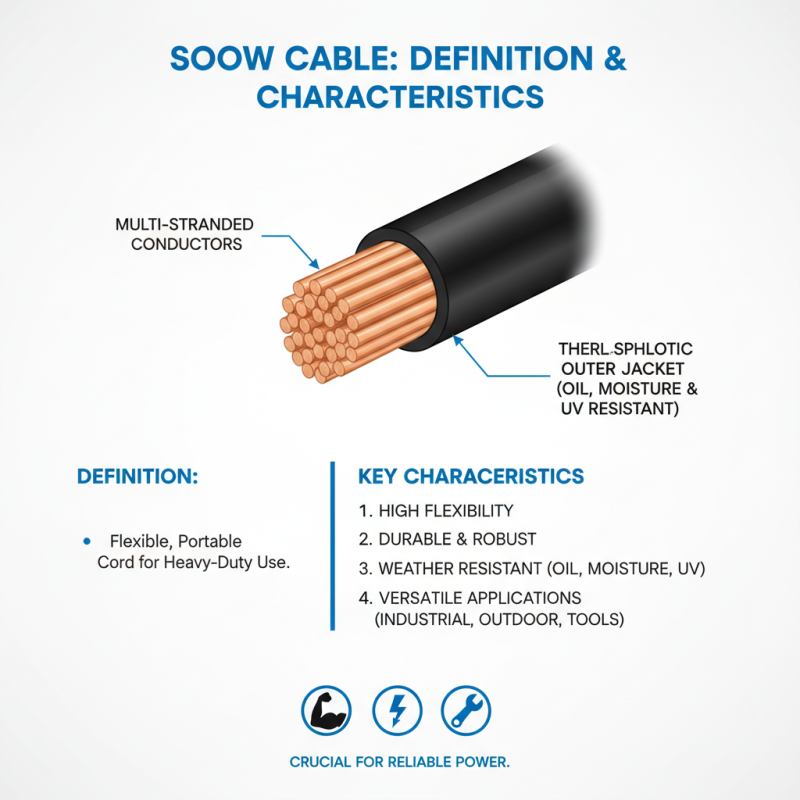
Soow cables are crucial for various electrical applications. They are flexible, portable, and designed for heavy-duty use. Typically, these cables consist of multi-stranded conductors. This design offers high flexibility and durability. The outer jacket is made from thermoplastic materials, providing protection from environmental factors.
Understanding the characteristics of Soow cables helps in selecting the right type. They are resistant to oil, chemicals, and abrasion. Additionally, Soow cables can handle extreme temperatures, which is vital for outdoor work. However, ensure you consider the gauge size and voltage rating before making a choice. Not all applications will benefit from the same cable type. Examining these factors prevents costly mistakes.
When considering Soow cables, think about where and how you will use them. Different projects may require specific features. Identifying the right specifications is essential but can be challenging. Making the wrong choice can lead to electrical failures. This highlights the importance of researching and understanding your needs before purchasing.
Types of Soow Cable: Variants and Their Applications
Choosing the right SOOW cable requires understanding its variants and applications. SOOW stands for "Service, Oil-resistant, Outdoor, Weather-resistant." This type of flexible cable is designed for portable and heavy-duty electrical applications.
There are several types of SOOW cables available. The most common types are 2-conductor, 3-conductor, and 4-conductor cables. Two-conductor SOOW cables are often used in smaller equipment. However, larger machines may require 4-conductor variants for three-phase power. Each type offers different levels of power handling and flexibility. According to industry reports, the flexible cable market is projected to grow by 5% annually, indicating the increasing need for these electrical solutions.
When choosing a SOOW cable, consider its insulation materials. Ethylene Propylene Rubber (EPR) is frequently utilized for its superior temperature resistance. However, this material may not be suitable for every application. Some users have reported issues with its flexibility in cold environments. Additionally, examining the voltage rating is crucial to ensure safety and reliability. Data from the National Electrical Manufacturers Association (NEMA) highlights that improper cable selection can lead to increased maintenance costs and risks of electrical failure.
How to Choose the Right Soow Cable for Your Electrical Needs? - Types of Soow Cable: Variants and Their Applications
| Type of Soow Cable |
Conductors |
Insulation Material |
Applications |
Temperature Rating |
| SOW Cable |
Stranded Copper |
PVC |
Portable power tools, construction sites |
-40°C to 90°C |
| SOOW Cable |
Stranded Copper |
Rubber |
Heavy-duty applications, outdoors |
-40°C to 90°C |
| SEOOW Cable |
Stranded Copper |
Rubber, Oil-resistant |
Oil and gas industry, marine applications |
-40°C to 90°C |
| SJOOW Cable |
Stranded Copper |
PVC |
Light-duty appliances, temporary lighting |
-40°C to 60°C |
Factors to Consider When Selecting Soow Cable
Choosing the right SOOW cable can significantly impact performance and safety in electrical applications. Several factors should influence your selection process. Consider the intended use of the cable. SOOW cables are often employed in high-demand scenarios, including industrial settings. The National Electrical Manufacturers Association (NEMA) reports a growing trend in energy efficiency, emphasizing the importance of selecting quality cables.
Another critical factor is the operating environment. SOOW cables are designed for flexibility and resistance against harsh conditions. This includes exposure to oils, chemicals, and mechanical wear. According to a report by the Institute of Electrical and Electronics Engineers (IEEE), improper cable selection can lead to 25% more failures in electrical systems. Ensure the cable's insulation is suitable for your environment.
Tips: Always check the voltage rating. Using a cable with a lower rating than required can lead to overheating. Look for high-strand copper cables for enhanced flexibility. Also, consider the length of the cable run; longer distances may require larger gauge cables to reduce voltage drop.
In summary, understanding your electrical needs is crucial. Evaluate both the mechanical and electrical properties of SOOW cables. Engage with experts if uncertain, as professional advice can help prevent costly mistakes.
Safety Standards and Ratings for Soow Cable
When selecting SOOW cables, safety standards and ratings are critical.
SOOW stands for Service, Oil-resistant, and Water-resistant, indicating its durability. The construction involves flexible conductors covered with a robust thermoset rubber.
This design provides protection against heat, moisture, and oil, making it suitable for various applications.
It's essential to understand the different safety ratings. The National Electric Code (NEC) outlines specifications that ensure cables are safe for use in particular environments. Recognizing the environment is vital. For example, a cable used outdoors must withstand UV exposure. In contrast, cables for indoor use focus more on flame resistance. Ignoring these considerations can lead to hazards.
Quality control and testing are also necessary. Manufacturers should perform rigorous checks to verify compliance with safety standards. However, not all manufacturers adhere to the same protocols. Consequently, not all cables meet the expected safety specifications. Always verify the certification labels before making a purchase. This careful attention ensures the right choice for your electrical needs.
Maintenance Tips for Soow Cable Installation and Use
Installing and maintaining SOOW cables requires attention to detail. Proper handling is essential to avoid damage. According to the National Electrical Manufacturers Association (NEMA), improper installation can reduce cable lifespan by up to 50%. This can lead to unexpected failures in critical systems, resulting in costly downtime.
Regular inspections are necessary to keep SOOW cables in optimal condition. Check for signs of wear, abrasion, or exposure to harsh chemicals. The American Society of Testing and Materials (ASTM) recommends inspecting cables at least biannually. If cables show visible damage, they must be replaced immediately to prevent electrical hazards.
Temperature extremes can also affect cable performance. SOOW cables are designed to operate in a range of temperatures, typically from -40°F to 90°F. Exceeding these limits can compromise insulation integrity. Users should be aware of environmental conditions during installation and operation. It's essential to employ best practices for cable routing; avoid sharp bends and excessive tension, as these can undermine reliability. Keeping these maintenance tips in mind will enhance performance and longevity.
Soow Cable Usage by Application