Leave Your Message

10 Best Electric Cable Wire Types for Your Next Project?

The world of "Electric Cable Wire" offers numerous options for project developers. As John Marshall, an expert in electrical engineering, once stated, "Choosing the right cable wire can make or break your project." With the right selection, projects can improve efficiency and safety.

Understanding the various types of electric cables is crucial. Each type serves specific needs. For instance, a PVC insulated wire is excellent for indoor installations. However, it lacks the durability required for outdoor use. In contrast, armoured cables provide superior protection. Yet, they can be more challenging to work with.

While advancements in cable technology enhance performance, challenges remain. Not every contractor is aware of the latest types. This oversight can lead to setbacks. Therefore, education in this field is essential. In an ever-evolving landscape, staying informed about "Electric Cable Wire" options is imperative for success in any project.

10 Best Electric Cable Wire Types for Your Next Project?

Understanding Different Electric Cable Wire Types

10 Best Electric Cable Wire Types for Your Next Project?

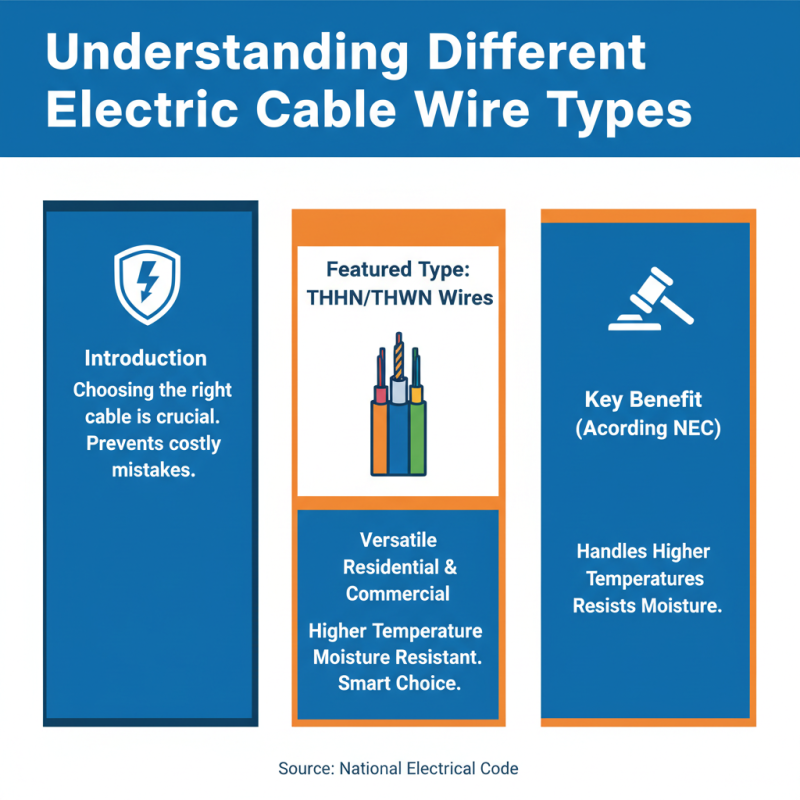
When embarking on an electrical project, choosing the right type of cable wire is crucial. Understanding the diversity in cable wire types can prevent costly mistakes. For instance, THHN/THWN wires are versatile and commonly used in residential and commercial applications. According to the National Electrical Code, these wires can handle higher temperatures and resist moisture, making them a smart choice for many projects.

In contrast, Romex is primarily designed for residential use. While it’s easy to install, it may not be suitable for certain high-stress environments. Data from the Electrical Safety Foundation International suggests that improper wire choice could lead to excessive overheating, resulting in hazardous conditions. This highlights the importance of selecting cables that fit the specific needs of your project.

Additionally, copper and aluminum are the two primary materials for electrical wires. Copper offers better conductivity and durability, often considered the gold standard. Aluminum is lighter and more cost-effective but may require thicker gauges to handle the same electrical load. A study by the Institute of Electrical and Electronics Engineers shows that using the wrong wire type can lead to inefficiencies and increased energy costs. Therefore, take the time to understand these factors before making your final decision.

Comparing Voltage and Current Ratings of Electric Wires

10 Best Electric Cable Wire Types for Your Next Project?

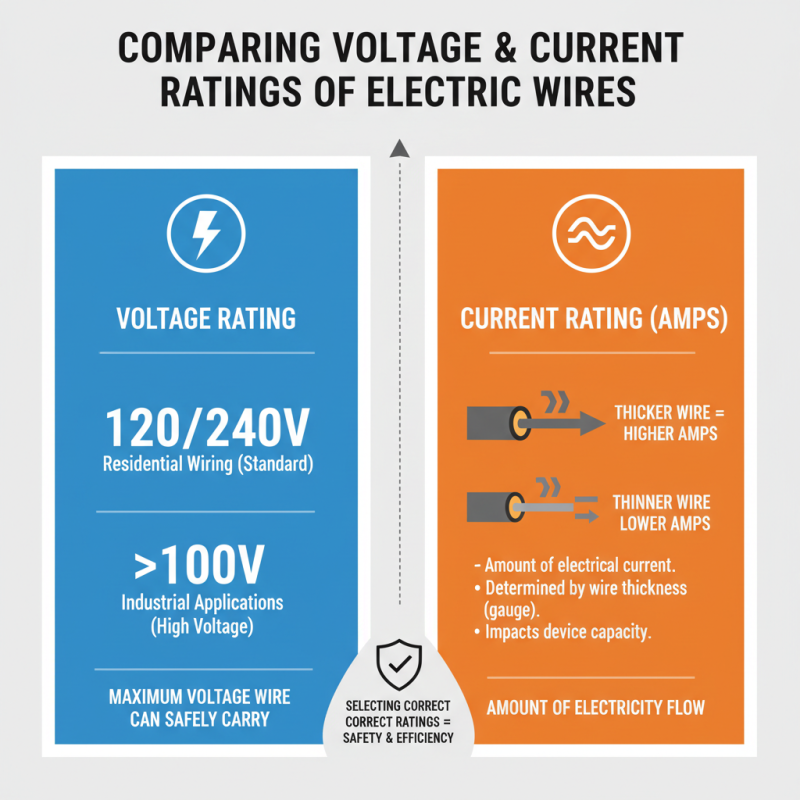
When selecting electric cables for your project, understanding voltage and current ratings is crucial. Voltage rating indicates the maximum voltage a wire can safely carry. For instance, standard residential wiring typically uses 120/240 volts. Higher voltage systems, like those in industrial applications, can exceed 1,000 volts. Selecting a wire rated for the correct voltage ensures safety and efficiency.

Current rating, also known as ampacity, defines how much electrical current a wire can handle without overheating. According to the National Electrical Code (NEC), a 12 AWG copper wire generally has a maximum current rating of around 20 amps. However, environmental factors play a significant role. For instance, wires installed in conduit may need de-rating if they are bundled or exposed to high temperatures. This nuance often gets overlooked, leading to potential safety hazards.

Different wire types, like THHN or UF, have varying voltage and current capabilities. THHN wires are designed for dry locations, while UF cables can withstand moisture. For a project involving outdoor componentry, selecting a wire that meets environmental conditions is essential. Failing to analyze these factors can lead to complications. Always assess the specific requirements of your project carefully. Understanding the voltage and current ratings will ensure you choose the right electric cable for safety and performance.

Evaluating Insulation Materials for Optimal Performance

Choosing the right insulation material is critical for performance when working with electric cables. The insulation protects wires from damage and enhances safety. Each insulation type has unique advantages suited for specific applications. For example, PVC (polyvinyl chloride) insulation is common due to its durability and resistance to chemicals. However, it may not perform well in extreme temperature conditions.

On the other hand, XLPE (cross-linked polyethylene) offers better thermal resistance. In fact, studies have shown that XLPE can handle temperatures up to 90°C without degrading. This makes it ideal for industrial settings. Knowing these traits helps in making informed decisions.

Tip: Always consider the environment where the cable will be installed. In wet or humid locations, opt for moisture-resistant insulation like EPR (ethylene propylene rubber). Remember, the right selection can prevent hazardous situations later. Also, be mindful that some insulation types might not be recyclable, leading to waste issues. Take time to research and assess the best fit for your project.

10 Best Electric Cable Wire Types for Your Next Project

Wire Type Insulation Material Temperature Rating (°C) Applications Voltage Rating (V)
THHN PVC 90 General wiring in buildings 600
XHHW Cross-linked polyethylene 90 Wet and dry locations 600
UF PVC 60 Underground installations 600
MC Metal clad 90 Commercial and industrial 600
SER PVC 90 Service entrances 600
Flexible Rubber 60 Tools and machinery 300
RHW Thermoplastic 75 Residential wiring 600
FEP Fluoropolymer 200 High-temperature applications 600
PV Thermoplastic elastomer 90 Solar energy systems 600
HFFR Halogen-free flame retardant 90 Fire-sensitive areas 600

Selecting the Right Gauge for Your Project Needs

Choosing the right gauge for your electrical project is essential. Wire gauge refers to the thickness of the wire. Thicker wires can handle more current but are also heavier and less flexible. A common mistake is picking a gauge based solely on convenience rather than actual need.

For safety reasons, it's vital to know what your project requires. A 14-gauge wire is often adequate for household circuits. However, higher power applications might need a 10 or 12-gauge wire. If unsure, using a thicker wire can often prevent potential issues. Yet, that can lead to difficulties in installation due to rigidity.

Consider the distance between your power source and devices. The longer the wire, the thicker it should be. Voltage drop can diminish effectiveness. Many overlook this aspect, leading to overheating and performance problems. Investigate the specifications before making a purchase. A little research goes a long way in preventing costly mistakes.

Applications and Uses of Common Electric Cable Types

When selecting the right electric cable for your project, understanding the applications of common wire types is crucial. PVC insulated cables are widely used in domestic installations. They offer flexibility and resistance to moisture. These cables suit various environments. Notably, the global market indicates that PVC cables dominate with a volume market share of around 40%.

Another popular type is the XLPE insulated cable. Known for its high thermal resistance, this cable works well in industrial settings. Data shows that these cables can withstand temperatures up to 90 degrees Celsius. Their durability makes them essential for heavy-duty applications. However, the higher cost can be a barrier for budget-conscious projects.

The selection of cables must also consider environmental factors. For instance, low smoke zero halogen (LSZH) cables minimize harmful emissions. These are particularly vital in public buildings. However, they may not be as flexible compared to other types. This trade-off can limit their usability in some scenarios.